

- This event has passed.
33rd BETA Annual International Conference and 3rd Regional Central and Eastern Europe FIPLV Congress
September 11 - September 13
| 33rd BETA Annual International Conference and
3rd Regional Central and Eastern Europe FIPLV Congress „Language Education: Expanding Perspectives, Enriching Practices“ 11th-13th September 2026, Sofia, Bulgaria SECOND CALL DEAR COLLEAGUES, We are delighted to extend our warm invitation to you for the 33rd BETA Annual International Conference and 3rd Regional Central and Eastern Europe FIPLV Congress. Hosted by the Bulgarian English Teachers’ Association (BETA), in collaboration with FIPLV (Fédération Internationale des Professeurs de Langues Vivantes), and the University of National and World Economy, this joint event will be held in Sofia, the beautiful capital city of Bulgaria, from 11th to 13th September 2026. |
The prestigious event will bring together educators representing diverse linguistic and cultural backgrounds, fostering meaningful dialogue and collaboration towards advancing language education worldwide. It aims to inspire and motivate language teachers to make the most of the teaching and learning contexts they work in, and to exploit the potential of various innovative and collaborative practices in all areas of ELT, ESP, modern languages education and research. The official languages of the event will include Bulgarian, English and German with presentations and workshops in the working languages, but contributions related to modern languages are more than welcome.
We would like to provide you with the opportunity to share your experience, expertise and insights into the fascinating world of language teaching and research. Areas of interest include, but are not limited to Teaching Young Learners and Teenagers; Teaching ESP/LSP; Teacher Education and Development; Bilingual Education; Literature, Media & Cultural Studies in ELT/Language Teaching; Global Issues; Content and Language Integrated Learning; Blended Learning; Applied linguistics; Research; Testing, Evaluation and Assessment.
Internationally prominent professionals in the field of ELT and modern languages education are invited as keynote speakers and workshop leaders. A book exhibition of major publishers and service providers will accompany the conference.
KEY DETAILS
SPEAKER PROPOSAL DEADLINE: 30th June 2026. For speaker proposal forms,
accommodation and other details visit https://forms.gle/83Gv3MScHdTCeuRw7
and check http://www.beta-iatefl.org.
Official languages: The official languages of the event will include Bulgarian, English and German with presentations and workshops in the working languages, but related to modern languages are more than welcome.
Important dates
Notification of acceptance: 30th July
Submission of papers: 31st October
Publication of conference proceedings in a special issue of BETA E-Newsletter: 31st December Submission requirements:
https://www.beta-iatefl.org/wp-content/uploads/2020/04/BETA-E-Newsletter-issue–42.pdf. FEES
Participants Early bird (until Regular fee registration 31st July)
| BETA members and Bulgarian teachers | 60 € | 80 € |
FIPLV 80 € 100 € members
Non-BETA 100 € 120 € & FIPLV
*Fees of foreign participants: payment will be made on-site to avoid heavy bank fees. The early bird rate will be applicable for those who have registered by 31st July and the regular rate – for those who register after 31st July. Only participants who need an invoice will have to pay by bank transfer with the transfer expenses covered by them.
*Presenters must pay their fees by 31st July.
Organising Committee
Assoc. Prof. Albena Stefanova, University of National and World Economy, Bulgaria
and
Dr Georgi Dimitrov, University of National and World Economy, Bulgaria, Chief Conference Organisers & BETA Committee Members
Assoc. Prof. Sylvia Velikova, St Cyril and St Methodius University of Veliko Turnovo, Bulgaria and FIPLV & FIPLV CEER representative
Assoc. Prof. Katalin Fogarasi, Semmelweis University, Hungary and HAALT representative Assoc. Prof. Veselin Chantov, University of Library Studies and Information Technologies, Bulgaria, BETA Committee Member
Lina Yanbastieva-Petrova, Yoan Ekzarh Balgarski Secondary School, BETA Committee Member
Drijenka Pandžić Kuliš, University of Zagreb, Croatia UNJSVU representative
Saša Sirk, Technical School Centre in Nova Gorica, Slovenia and SDUTSJ representative
Scientific Committee
Prof. Terry Lamb, University of Westminster, the UK. FIPLV President
Dr Geraldo de Carvalho, Werther Institut Juiz de Fora, Brazil, Secretary-General of FIPLV Assoc. Prof. Sylvia Velikova, St Cyril and St Methodius University of Veliko Turnovo, Bulgaria Assoc. Prof. Albena Stefanova, University of National and World Economy, Bulgaria
Assoc. Prof. Veselin Chantov, University of Library Studies and Information Technologies,
Bulgaria
Assoc. Prof. Katalin Fogarasi, Semmelweis University, Hungary and HAALT representative Dr Mirna Varga, University of Osijek, Croatia and UNJSVU representative
Dr Nataša Gaišt, University of Maribor, Slovenia and SDUTSJ representative
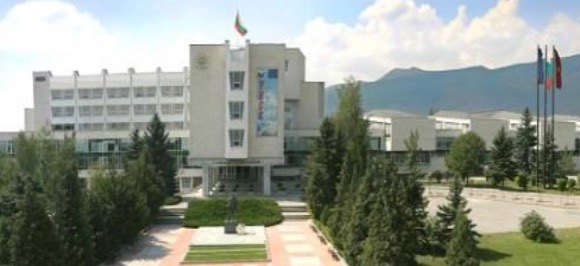
Dr Georgi Dimitrov, University of National and World Economy, Bulgaria Venue: The University of National and World Economy, Sofia, Bulgaria For further queries, contact beta.iateflbg@gmail.com
We very much look forward to seeing you in Sofia.
Kind regards,
The Conference and Congress Organising Committee
BETA 2026 Plenary Speakers
Judit Hidasi (PhD in Applied Linguistics) has been active in foreign language teaching (English, Russian, Japanese) and in intercultural communication education and training for five decades. She spent longer periods of study, research and work in China, in Finland, in Great Britain, in Italy, in Japan, in the Soviet Union and on Taiwan.
Her academic practice was interrupted by three years of civil service at the Hungarian Ministry of Education (1998-2001) and a five-year guest professorship at Kanda University of International Studies (Japan: 2001-2006). She is professor emerita of BUEB (Budapest University of Economics and Business) and of Sapientia EMTE University (Cluj, Romania). She is vice-president of HAALLT (Hungarian Association of Applied Linguists and Language Teachers).
For her merits in 2005 she was decorated by the Order of the Rising Sun (Japan) and in 2022 by the International Award of FIPLV.
Plenary Talk: Language as Soft Power
Soft power denotes the ability to influence through attraction and persuasion rather than coercion or force. Among the many tools of soft power—such as culture, values, and diplomacy—language stands out as one of the most subtle yet powerful instruments. Language becomes a long-term investment in building international networks and goodwill. Moreover, language can shape global narratives.
There are different ways to rank languages globally—by native speakers, by total speakers, use in business, and soft power influence. Each tells a very different story about global power. Although English dominates across three of the dimensions, Mandarin Chinese is rising fast. European languages (French, Spanish, German) remain influential due to history and institutions, whereas Asian languages (Hindi, Korean, Japanese) are gaining power with shifting global dynamics.
The dominance of global languages however can sometimes lead to the marginalization of local languages and cultures. This raises concerns about cultural homogenization and the loss of linguistic diversity. At this point the responsibility of foreign language educators gains momentum.
Dragana Božić Lenard is an Associate Professor at the Faculty of Electrical Engineering, Computer Science and Information Technology (FERIT), Josip Juraj Strossmayer University of Osijek, Croatia, where she teaches English for Specific Purposes to computer science students.
She holds a PhD in Linguistics from the Faculty of Humanities and Social Sciences, Osijek. Her current research interests span ESP pedagogy, sociolinguistics, computational linguistics, and the integration of digital and AI-based tools in language learning and teaching. Her most recent work investigates how ESP students perceive and use AI tools (from digital dictionaries to large language model chatbots) and what these practices mean for the future of ESP course design and teacher roles.
She is the author of one scientific monograph, university coursebook and accompanying teachers’ book and over twenty research papers published in international peer-reviewed journals. She has presented her research at numerous national and international conferences. She has participated in several national and international research projects.
Plenary Talk: Between the Algorithm and the Classroom: AI Tools, ESP Learners, and the Teacher in the Middle
AI tools have quietly become a fixture in the ESP classroom — not through institutional policy, but through students’ smartphones. Chatbots, instant translators, and AI writing assistants are now part of how technical students engage with English, with or without their teachers’ knowledge. But are these tools expanding learners’ language competence, or simply making it easier to bypass the learning process altogether?
Drawing on empirical research with ESP students at a Faculty of Electrical Engineering, Computer Science and Information Technology in Croatia, this plenary examines how students use AI-based language tools, what they believe these tools offer them, and where that belief diverges from their actual needs as developing professional communicators. The findings point to a telling pattern: high convenience, low criticality.
The talk proposes a framework for intentional AI integration in ESP — one that repositions the teacher not as a technology gatekeeper, but as a critical mediator who cultivates AI literacy alongside disciplinary language competence. The central argument is simple: the question is no longer whether AI belongs in our classrooms. It is whether we, as educators, are ready to make it work for learning rather than instead of it.
Dubravka Celinšek is Assistant Professor of English and Head of the Department of Foreign Languages for Business at the University of Primorska, Faculty of Management, and is also a member of the Slovenian Academy of Management and the Slovenian Association of LSP Teachers. She is actively involved in the university tutoring system and was also involved in designing the university’s language policy. Her research interests encompass translating terminology, problem-based learning, teaching LSP with regard to socio-economic contexts as well as teaching LSP, especially terminology, through novels and plays. She has authored and co- authored teaching materials and textbooks, alongside professional and scientific publications.
Plenary Talk: Bridging Language and Disciplinary Knowledge in LSP through Literary Texts and Problem-Based Learning
Contemporary approaches to teaching languages at the tertiary level increasingly rely on digital tools. This presentation argues that literary texts and problem-based learning (PBL) remain valuable and underused resources for supporting students’ acquisition of terminology and developing their critical thinking skills and conceptual understanding in languages for specific purposes (LSP). In this presentation I will therefore focus on two complementary dimensions of LSP teaching: reading for conceptual understanding and the development of critical thinking. First, the talk examines the integration of literary texts into business and financial English as a bridge between disciplinary context and knowledge on the one hand, and language use on the other. Students engage with literary works that depict financial contexts, analysing how key concepts and instruments are experienced by fictional protagonists. This approach provides students with a condensed yet “close-to-real-life” context that supports deeper conceptual understanding. The presentation then introduces an adapted problem-based learning (PBL) model for LSP that fosters collaborative learning, autonomy, conceptual understanding and problem-solving skills. This could be used with literary works as well as with professional texts. The approaches discussed demonstrate the potential to enhance terminology acquisition and understanding of disciplinary contexts. They increase student engagement and reinforce the link between language learning and disciplinary thinking.